E-Commerce: UNCTAD has assessed Benin’s readiness for electronic commerce.
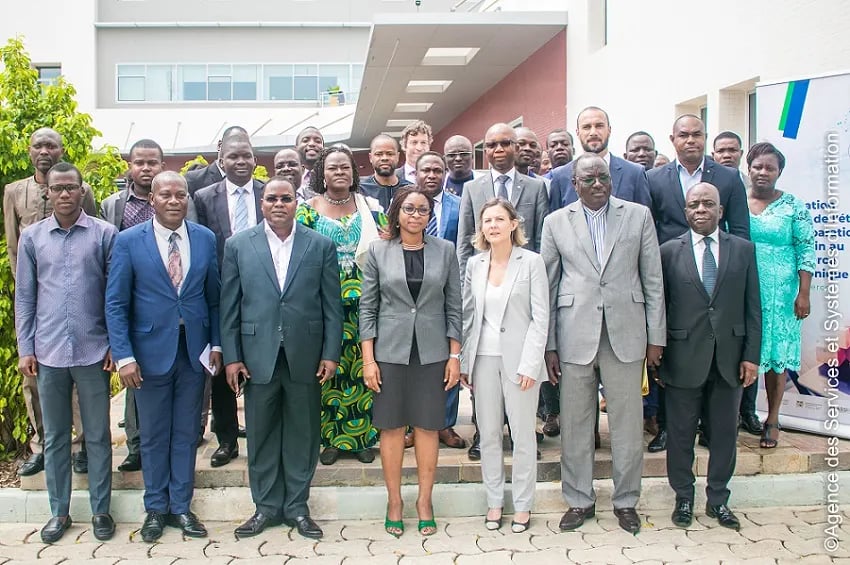
A rapid assessment workshop on Benin’s e-commerce readiness was held in Cotonou from 8 to 11 October 2019. Co-organised by the Ministry of Digital Affairs and Digitalisation, the Ministry of Industry and Trade and the United Nations Conference on Trade and Development (UNCTAD), the workshop aims, on the one hand, to give our country a clear picture of its e-commerce capabilities and, on the other, to enable it to formulate a strategy to overcome the obstacles to its development.
This mission is fully in line with the vision of the Head of State, President Patrice TALON, “to use Information and Communication Technologies (ICT) as a catalyst for economic momentum and the modernisation of Benin in order to accelerate economic growth and social inclusion by 2021”.
According to Ms Aurelie ADAM SOULE ZOUMAROU, Minister of Digital Affairs and Digitalisation, who officially opened the workshop, the Government’s ambition, through the ministry she heads, is to make Benin’s economy strong and its digitalisation far-reaching. To this end, several tangible steps have already been taken, including the promulgation of the Digital Code and the ratification on the recognition of electronic contracts.
Aware of the importance of digital technology in trade, the Minister of Digital Affairs and Digitalisation considers the support of the UNCTAD programme essential to diagnose the e-commerce ecosystem, identify the digital challenges and opportunities for Benin and define recommendations and a matrix of priority actions, while taking into account our technological environment and the policy and institutional framework, as well as their applications. This would make it easier “to identify areas for improvement, to build our advocacy with stakeholders and to implement the recommendations aimed at making e-commerce an effective development tool”.
AN UNAVOIDABLE GLOBAL PHENOMENON
Digitalisation is a global phenomenon that is imposing itself on every country, and those that do not adapt to it will be left behind, insisted Ms Cécile BARAYE El-SHAMI, representative of the United Nations Conference on Trade and Development (UNCTAD). In her view, access to digital technology should enable the Least Developed Countries (LDCs) to access world trade directly, create new jobs and develop new skills. Hence the importance of adopting general, regulatory and institutional frameworks that are coherent and suited to these new challenges. Developing human skills to harness the potential of e-commerce is also essential. With its strong population growth, Africa could find in digital technology fertile ground for jobs, she added.
WOMEN BUSINESS LEADERS TRAINED
Representing Ms Shadiya Alimatou ASSOUMAN, Minister of Industry and Trade, Mr Amzat SALAMI, Secretary General of that ministry, thanked all stakeholders for their support and expressed the hope that the Least Developed Countries would take advantage of the support of organisations such as UNCTAD to rise to the rank of emerging countries in the field of e-commerce. Taking a proactive approach, the Ministry of Industry and Trade has already trained more than 500 women business leaders in e-commerce through the Enhanced Integrated Framework (EIF) programme, he said.
At the end of this work, Benin will have an e-commerce strategy that will facilitate the integration of Beninese economic operators’ activities into e-commerce, support the digitalisation of “Made in Benin” products and encourage young people and women to make the best use of e-commerce to promote inclusive and sustainable trade.